History
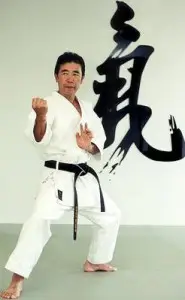
SOKE SATO – Sato Kai Founder and Current Head Instructor
This is the home dojo for the International Satokai Chief Instructor, Akira Sato, 9th Dan. Sensei Sato has been teaching in Vancouver since 1970, after previously studying in Japan.
Sensei Sato has travelled to 41 countries for workshops and tournaments.
He and a team of experienced black belt instructors provide classes at all levels for both adults and children. Students very quickly master the skills necessary to advance through the various levels. Many Vancouver Shito-Ryu students excel in local, national and international tournaments.

1893
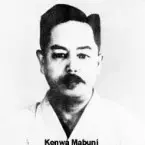
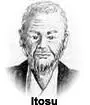
Any history of Shitoryu Karate, however, must begin and end with its founder, Kenwa Mabuni. Born in Shuri on Okinawa in 1893, Mabuni Sensei was a descendant of the famous Onigusukini Samurai family. Perhaps because of his weak constitution, he began his instruction in his home town in the art of Shuri-Te at the age of 13, under the tutelage of the legendary Ankoh Yasutsune Itosu (1813-1915). He trained diligently for several years, learning many kata from this great Master. It was Itosu who first developed the Pinan kata, which were most probably derived from the ‘Kusanku’ form.
One of his close friends, Sensei Chogun Miyagi (founder of Goju-ryu) introduced Mabuni to another great of that period, Sensei Kanryo Higashionna, and began to learn Naha-Te under him as well. While both Itosu and Higashionna taught a ‘hard-soft’ style of Okinawan ‘Te’, their methods and emphases were quite distinct: the Itosu syllabus included straight and powerful techniques as exemplified in the Naifanchi and Bassai kata; the Higashionna syllabus on the other hand, stressed circular motion and shorter fighting methods as seen in the popular Seipai and Kururunfa forms. These were the two main influences on the development of Mabuni Sensei and what he would later call Shito-ryu. In fact, he derived the name for his new style from the first Kanji character in their names, Itosu and Higashionna.
1920
Although he remained true to the teachings of these two great masters, Mabuni sought instruction from a number of masters, including Seisho Aragaki, Tawada Shimboku, Sueyoshi Jino and Wu Xianhui (a Chinese master known as Go-Kenki). In fact, Mabuni was legendary for his encyclopaedic knowledge of kata and their bunkai applications. By the 1920s, he was regarded as the foremost authority on Okinawan kata and their history and was much sought after as a teacher by his contemporaries. There is even some evidence that his expertise was sought out in China, as well as Okinawa and mainland Japan. As a police officer, he taught local law enforcement officers and at the behest of his teacher Itosu, began instruction in the various grammar schools in Shuri and Naha.
In an effort to popularize Karate in mainland Japan, Mabuni made several trips to Tokyo in 1917 and 1928. Although much that was known as ‘Te’ (Chinese Fist) or Karate had been passed down through many generations with jealous secrecy, it was his view that it should be taught to anyone who sought knowledge with honesty and integrity. In fact, many masters of his generation held similar views on the future of Karate: Sensei Gichin Funakoshi (founder of Shotokan), another contemporary, had moved to Tokyo in the 1920s to promote their art on the mainland as well.
1929
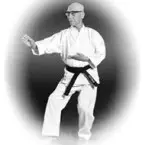
By 1929, Mabuni had moved to Osaka on the mainland, to become a full-time Karate instructor. With the support of Sensei Ryusho Sakagami (1915-1993), he opened a number of dojo in the Osaka area, including Kansai University and the Japan Karatedo Kai dojo. To this day, the largest contingent of Shito-ryu practitioners in Japan is centred in the Osaka area.
In an effort to gain acceptance in the Japanese Butokukai, the governing body for all officially recognized martial arts, he and his contemporaries decided to call their art ‘Karate’ or ‘Empty Hand’, rather than ‘Chinese Hand’. He published a number of books on the subject and continued to systematize the instruction method. In his latter years, he developed a number of formal kata, such as Aoyagi, for example, which was designed specifically for women’s self defence. Perhaps more than any other Master in the last century, Mabuni was steeped in the traditions and history of Karate-do, yet forward thinking enough to realize that it could spread throughout the world.